Friday, April 26, 2013

Exodus Chapter 1 ~ Fearing God & Longing for Salvation in the Face of Oppression & Infanticide


Exodus Chapter 1

The sons of Israel who went to Egypt with Jacob were:
(1) Reuben (2) Simeon (3) Levi (4) Judah (5) Issachar (6) Zebulun (7) Benjamin (8) Dan (9) Naphtali (10) Gad (11) Asher
Jacob's descendants numbered 70 persons (v. 5). Joseph, his brothers, and all that generation died, but the people of Israel were fruitful and increased greatly; they multiplied and grew exceedingly strong, so that the land was filled with them (v. 5-7).

Egyptian Oppression of Israel
A new king arose in Egypt who didn't know Joseph. He told his people that Israel was too numerous and too strong, so they should deal shrewdly with them, in case they multiply and war breaks out and they join Egypt's enemies and escape (v. 8-10). The Egyptians set taskmasters over Israel to afflict them with heavy burdens. The Egyptians made them build store cities, Pithom and Raamses (v. 11). The more they were oppressed, the more thy multiplied, so the Egyptians were more in dread of them. The Egyptians ruthlessly made Israel work as slaves, made their lives bitter with hard service in mortar and brick, and field work.


Order to Kill Their Baby Boys
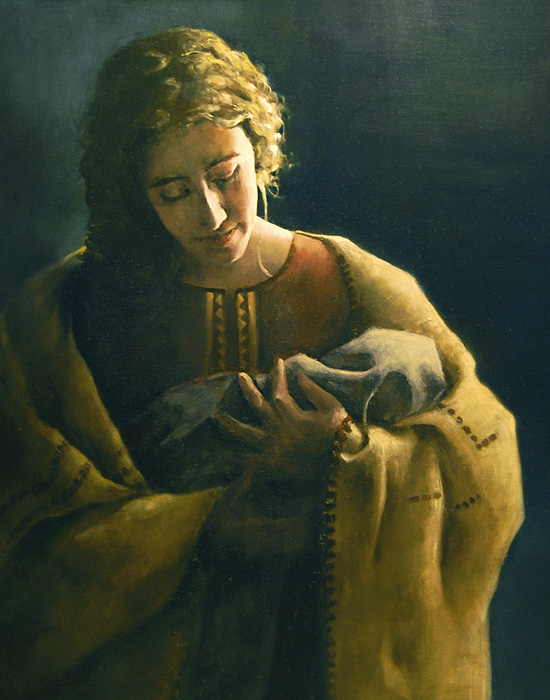
The king of Egypt told the Hebrew midwives, Shiphrah ("brightness") and Puah ("splendid"), to kill the sons that were born, but, "the midwives feared God and did not do as the king of Egypt commanded them, but let the male children live." (v. 16-17) The king of Egypt called the midwives and said, "Why have you done this, and let the male children live?" (v. 18)

The midwives said, "Because the Hebrew women are not like the Egyptian women, for they are vigorous and give birth before the midwife comes to them." (v. 19) So God dealt well with the midwives and the people multiplied and grew strong (v. 20). Because the midwives feared God he gave them families (v. 21). So Pharaoh commanded all his people to kill every son born to the Hebrews by casting them into the Nile river, but let every daughter live." (v. 22)

Reflections on Exodus 1
The first couple verses show that this is the continuation of the narrative in Genesis. Where Genesis left off, Exodus begins. Exodus means "going out". 

First, in this chapter we see that a fear rose up in Egypt because the Hebrews were prospering. So they oppressed the Hebrews with forced labor and made their lives bitter. In Genesis 15 even as it became dark as the Lord told Abraham that his posterity would be oppressed in Egypt for 400 years, here we see the literal descent of the Hebrews into darkness. Their lives were bitter. Is there any hope in the midst of this trial? Notice too, that this is coming up to the end of 400 years. Year after year, generation after generation of this people descended into the darkness of this bondage and slavery. These were real people undergoing real hardship for centuries. Would Yahweh hear? Would the promised deliverance ever come? Will God send His promised Messiah? All of these questions are present as the baton of the history of redemption is passed from Genesis to Exodus.

Second, can you imagine being ordered by the leader of your nation to head up the slaughter of the children of your own ethnicity? I pray that with the modern national interest in healthcare that this will not be something we face. Pharaoh told the Hebrew healthcare professionals of their day (the midwives) to kill the children. One of the measures of how evil a society is, is displayed in how it treats its children. Indeed, this was a dark providence in the life of Israel. The modern moment is different in some of its nuances, but the prevalence of abortion in our lifetime has to be comparable to the evil and depravity of the Egypt of Exodus. I pray that God would pour out His mercy and bring our holocaust to an end.

Third, did God bless a lie told by Shiphrah and Puah here? First, The description that they, "didn't do as they were told," doesn't necessarily mean they were pursuing an act of civil disobedience and then turning around and lying. It may be that they didn't kill the boys, because in God's providence they were spared the opportunity: "[T]he Hebrew women are not like the Egyptian women, for they are vigorous and give birth before the midwife comes to them." Perhaps they didn't do as they were told because they didn't have the opportunity to do as they were told. There's no reason to assume they are lying. It may be that they feared the Lord, and didn't want to do this, and they didn't murder the baby boys, because in God's providence they weren't given the opportunity. I lean to this view.

Second, if they were lying there's no reason to conclude that the lie is the reason that the Hebrews are being blessed. Alan Cole is helpful on this point, "Even if they lied, it is not for their deceit that they are commended, but for their refusal to take infant lives, God's gift." (Cole, 62) Perhaps this is another display of the complexity of how the Lord works in His providence in and among a fallen and sinful world. God was kind to the midwives, because they obeyed Him and not Pharaoh. If they lied, there is no reason to assume that the lie is the reason that Yahweh was kind to them.

Third, when the text says, "He gave them families," (v. 21) it seems to be referring to, "the people," (v. 20) or the Hebrews in general, not only the midwives. John Calvin is helpful on verse 21, "It is not at all my opinion that this should be expounded as referring to the women, and I am surprised that many interpreters have been grossly mistaken on so clear a point. All are agreed that the pronoun is masculine, and therefore, according to ordinary usage, should refer to males." (Calvin, Vol. 2, 36) It appears the masculine pronoun refers to the people in general, not just the midwives. Because of God's providence in the lives of these two women God's people prospered. You may be one person, but God is all-powerful, and He may do amazing things through you for the sake of His glory.

Fourth, what is the "fear of God" we see in verses 17 and 21? This is a concept that was introduced in Genesis (20:11; 22:12; 31:42, 53; 42:18). What does it mean? Well, from what we've seen so far (and from what we see in the rest of Scripture) "the fear of God" indicates trust, faith, obedience, belief, respect, reverence, awe, concern, worship, service, and love of Yahweh. The "fear of God" is a Hebrew idiom basically saying "the worship of God". We see in the wisdom and prophets that the fear of God is the beginning of wisdom (Job 28:28; Psalm 111:10; Proverbs 1:7; 9:10; 15:33; Isaiah 11:2; 33:6; Micah 6:9). In this text we see the Hebrew fear of God contrasted by another fear, namely the Egyptian fear of man (the Hebrews). They were afraid of them because they were multiplying and growing stronger as a people. The Egyptians were afraid of an enslaved and weak people. The Hebrews were afraid of the omnipotent, omnipresent, omniscient, and omnibenevolent God who exercises His meticulous sovereignty over the cosmos. Notice that fear drives both of their behavior. Our identity is shaped by what we fear. Often, what we fear is what we worship, and it controls us. What do you fear? In this text the Egyptians are understanding their identity in relationship to the Hebrews, and the Hebrews are seeking to understand their identity in relationship to Yahweh. The only true understanding of self comes in light of the knowledge and worship of God (the "fear of God").

The Egyptians may have forgotten their history (v. 8), but the Hebrews haven't forgotten theirs. They still trust God. After 400 years of bondage, they are still trusting in God. It may seem He is distant in their suffering. It may seem that He does not know. It may seem that He does not hear and has abandoned them, but they know that God is trustworthy. Here in the hearts and lives of two women, we see that God's people keep trusting Him even as their circumstances appear to lie about His care. In this chapter we are on the cusp of seeing clear evidence that their fear of God is not irrational (we have evidence from their past too, but a particularly strong demonstration of it is coming in Exodus). Indeed Yahweh is near. He knows. He hears and has not abandoned them.

Jesus Christ
In Exodus 1 we stand with Israel, as those who can't quite see the fullness of the beauty of the redemption that is to come. The only thing we see is the glimmer of hope that rests in the Hebrew fear of God. God reveals more and more knowledge about what His ultimate salvation will look like, but the entire Old Testament stands in a similar position. On the other side of the cross we have a wholly different and yet similar experience.

Wholly Different - We have seen the Messiah that the Hebrews trusted would come from God, Jesus Christ. The second person of the triune Godhead came and lived the perfect life we all should have lived. He died a substitutionary death in the place of His people. He bore the eternal wrath of God in His body on the cross, satisfying God's eternal wrath. Jesus was raised from the dead justifying those who turn from their sin and believe in this good news. Full salvation has come and is offered to us in Jesus Christ. We have seen God's salvation, not just from a governmental force in the world, but from our sin, and from the eternal wrath of God. 

Similar - The world is still fallen. Christ ascended to the right hand of the Father and makes intercession for His people even now. He has given us the gift of His Holy Spirit, and now, we await His glorious revealing. Salvation has been accomplished and applied in the death and resurrection of Jesus Christ, but it has not yet been fully consummated. Jesus will come back one day. So for now we wait and long for our Savior. We share of the good news of the Jesus Christ while we wait.

This is instructive for us as believers in Christ. Even as we wait for Jesus Christ to return to take us to be with Him were He is, we know some of what the Hebrews were facing. Many Christians in this age are being persecuted for their faith - death, mocking, pushed to the fringe of society, etc. (if you disagree think of Christians not only in the West, and you will realize your disagreement is unwarranted). It will not always be this way. God not only heard the Hebrews at this time. He hears our cry for final redemption too. This has been the cry of the church throughout the ages, "Come, Lord Jesus." (Revelation 22:20) We walk in the fear of God now, even as we wait for the horizon of eternal blessedness to be revealed when the final trump will resound and the Lord will descend.

Thursday, April 25, 2013

Genesis Overview & Wrap-Up

Genesis Wrap Up

Here's a one sentence summary of Genesis: “God sovereignly creates and sustains all things by His providence, and He chooses to save a people, and promises a 'Christ' through His Word.”

Here is a compilation of all my posts on Genesis:


22. Genesis Chapter 19 ~ Judgment for Sin on Sodom & Gomorrah                 

Wednesday, April 24, 2013

Genesis Chapter 50 ~ Jacob's Burial, Evil for Good, & Joseph's Death

Genesis Chapter 50

Jacob's Burial
After Jacob died Joseph fell on his father's face and wept over him and kissed him (v. 1). Joseph commanded his servants to embalm Jacob and they did over 40 days, and the Egyptians wept for Jacob 70 days (v. 3). When the mourning period was over Joseph asked to be able to fulfill Jacob's wish to be buried in Canaan, and Pharaoh allowed him. All the servants of Pharaoh, the elders of Pharaoh's household, and all the elders of the land of Egypt, the household of Joseph, his brothers, and Jacob's household went with him (v. 7-8). Only the children and the live-stock stayed behind in Goshen. Chariots and horsemen, a great company went with Joseph (v. 9): "They lamented there with a very great and grievous lamentation, and he made a mourning for his father seven days." (v. 10)

Then the Canaanites saw their mourning they said, "This is a grievous mourning by the Egyptians." (v. 11) Jacob's sons did as he asked, they carried him to the land of Canaan and buried him in the cave of the field at Machpelah (v. 13). After Jacob was buried Joseph returned to Egypt with his brothers and everyone who went up with him.

God Meant Man's Evil for Good
After Jacob's death Joseph's brothers said, "It may be that Joseph will hate us and pay us back or all the evil that we did to him." (v. 15) So they sent Joseph a message they made up, saying, "Your father gave this command before he died: 'Say to Joseph, "Please forgive the transgression of your brothers and their sin, because they did evil to you."'" (v. 16-17)

Joseph wept and they spoke to him, "Behold, we are your servants." (v. 18) But Joseph said to them:

"Do not fear, for am I in the place of God? As for you, you meant evil against me, but God meant it for good, to bring it about that many people should be kept alive, as they are today. So do not fear; I will provide for you and your little ones." (v. 19-21)

He was kind to them and comforted them.

Joseph's Death
Joseph remained in Egypt and lived 110 years. Joseph saw Ephraim's children of the 3rd generation. Also, the children of Machir the son of Manasseh were counted as Joseph's own. Joseph said to his brothers, "I am about to die, but God will visit you and bring you up out of this land to the land that he swore to Abraham, to Isaac, and to Jacob." (v. 24)

Joseph made the sons of Israel swear, "God will surely visit you, and you shall carry my bones from here." (v. 25) Joseph died, and they embalmed him and put him in a coffin in Egypt (v. 26).

Reflections on Genesis 50
First - The Sovereignty of God. As the book of Genesis comes to a close we see that just as God created all things out of nothing by speaking, we see that He continues to be at work in His creation. God is not a cosmic inventor who stands idly by His created machine. No, He is at work in all the details in this world. He exercises a meticulous sovereignty over all things, even evil.

Second - The Responsibility of Man. Even though the Lord sovereignly uses and accomplishes His good and just purposes by "meaning" evil for good, mankind is not off the hook. This speaks to the reality that just because God uses a means to a good end that doesn't prove that it was a good and holy action on the part of mankind. We will be held responsible for the evil we intend and commit. God will pour our his perfectly just judgment and punishment in eternal conscious torment on all who commit evil acts. We know, though, in the midst of this, that God is working in and through evil circumstances for good.

Third - Foreshadow. Even as the large company makes the journey to Canaan to bury Jacob, Joseph speaks prophetically of the nation of Israel coming back into the land at a later time in his request, "God will surely visit you, and you shall carry my bones from here." Genesis 50:25-26 are pregnant with meaning. In Genesis 15:13-14, God's covenant with Abraham entailed the giving of the land of Canaan to his offspring after 400 years of sojourning in a land that is not theirs: "Then the LORD said to Abram, 'Know for certain that your offspring will be sojourners in a land that is not theirs and will be servants there, and they will be afflicted for four hundred years. But I will bring judgment on the nation that they serve, and afterward they shall come out with great possessions'". Now we know what land God was speaking of, Egypt. And now we will wait 400 years to see the next chapter of the story of the history of redemption. We will wait 400 years before we see how God's promise of a Savior will be carried through the lineage of Israel. The last phrase of Genesis 50 is powerful, "So Joseph died, being 110 years old. They embalmed him, and he was put in a coffin in Egypt." His bones were not taken to Canaan like Jacob's. They would sit in Egypt while the next 400 years pass. This is building up in anticipation of what is yet to come.

Jesus Christ
This reminds me of the four hundred years of silence between the Old and New Testaments. Even as we await the salvation and exodus of God's people from slavery in Egypt between Genesis and Exodus, so in the 400 years of silence between the Old and New Testaments we anticipate God's true king, Jesus Christ, who would come to save a people from all nations, tribes, and languages from their sin and the eternal wrath of God. Praise God, that even though time rolls along, His salvation is certain. Even now we wait for the glorious revealing of Christ our King when He will come again to finally bring us home to the eternal joy of being with Him. It will come, we only wait, and pray along with the Apostle John, "Come, Lord Jesus."

Tuesday, April 23, 2013

Genesis Chapter 49 ~ God's Covenantal Promise & Jacob's Blessing

Genesis Chapter 49

Jacob Blesses His Sons
Jacob called his sons and said, "Gather yourselves together, that I may tell you what shall happen to you in the days to come. Assemble and listen, O sons of Jacob, listen to Israel your father." (vs. 1-2)
(1) Reuben: firstborn, Jacob's might, firstfruit of his strength, preeminent in dignity and power. Unstable as water, you shall not have preeminence, because you defiled your father's bed (vs. 3-4)
(2) Simeon & (3) Levi: weapons of violence are their swords. "Let my soul not come into their council. O my glory, be not joined to their company." (vs. 6) In anger they killed men, and in their willingness hamstrung oxen. "Chursed be their anger, for it is fierce, and their wrath, for it is cruel! I will divide them in Jacob and scatter them in Israel. (vs. 5-7)
(4) Judah: "Your brothers shall praise you; your hand shall be on the neck of your enemies; your father's sons shall bow down before you. Judah is a lion's cub; from the prey, my son, you have gone up. He stooped down; he crouched as a lion and as a lioness; who dares rouse him? The scepter shall not depart from Judah, nor the ruler's staff from between his feet, until tribute comes to him; and to him shall be the obedience of the peoples. Binding his foal to the vine and his donkey's colt to the choice vine, he has washed his garments in wine and his vesture in the blood of grapes. His eyes are darker than wine, and his teeth whiter than milk." (vs. 8-12)
(5) Zebulun: He'll dwell at the shore of the sea, and become a haven for ships, and his border shall be at Sidon. (vs. 13-14)
(6) Issachar: He's strong like a donkey, crouching between the sheepfolds. He saw that a resting place was good, and that the land was pleasant, so he bowed his shoulder to bear, and became a servant at forced labor. (vs. 14-15)
(7) Dan: He'll judge his people as one of the tribes of Israel. He'll be a serpent in the way, a viper by the path, that bites the horse's heels so that his rider falls backward. "I wait for your salvation, O LORD." (vs. 16-18)
(8) Gad: Raiders shall raid Gad, but he shall raid at their heels. (vs. 19) 
(9) Asher: His food shall be rich, and he shall yield royal delicacies. (vs. 20)
(10) Naphtali: He is a doe let loose that bears beautiful fawns. (vs. 21)
(11) Joseph: "Joseph is a fruitful bough, a fruitful bough by a spring; his branches run over the wall. The archers bitterly attacked him, shot at him, and harassed him severely, yet his bow remained unmoved; his arms were made agile by the hands of the Mighty One of Jacob (from there is the Shepherd, the Stone of Israel), by the God of your father who will help you, by the Almighty who will bless you with blessings of heaven above, blessings of the deep that crouches beneath, blessings of the breasts and of the womb. The blessings of your father are mighty beyond the blessings of my parents, up to the bounties of the everlasting hills. May they be on the head of Joseph, and on the brow of him who was set apart from his brothers." (vs. 22-26)  
(12) Benjamin: He's a ravenous wolf, in the morning devouring the prey and at evening dividing the spoil. (vs. 27)
These are the 12 tribes of Israel, and these are the blessings Jacob spoke that were suitable each. Then he commanded them and said:
"I am to be gathered to my people; bury me with my fathers in the cave that is in the field of Ephron the Hittite, in the cave that is in the field at Machpelah, to the east of Mamre, in the land of Canaan, which Abraham bought with the field from Ephron the Hittite to possess as a burying place. There they buried Abraham and Sarah his wife. There they buried Isaac and Rebekah his wife, and there I buried Leah - the field and the cave that is in it were bought from the Hittites." (vs. 29-32)
When Jacob finished commanding his sons, he drew up his feet into the bed and breathed his last and was gathered to his people.

Reflections on Genesis 49
In this chapter we see some of the nature of God's covenant with Abraham, Isaac, and Jacob. Jacob is functioning as God's prophet in this chapter. His family is still the the vehicle that God will use to bring about His Messiah, Jesus Christ. The question that we have asked again and again in Genesis is whether or not the next of kin is God's Messiah-King that was promised to in Genesis 3:15. This is a question that we should ask all throughout the Old Testament, because it should have been what Israel was constantly on the look out for. The entire Old Testament is pointing at Jesus Christ. Jacob, and his sons, is the line through which God will bring His Messiah, and we see the promise in the blessing of Judah. (vs. 8-12) We see God's promise through Jacob's prophecy that the scepter shall not depart from Judah, and to him shall be the obedience of the peoples. This blessing will be more clearly seen in the fulfillment God's covenant with David in 2 Samuel 7 that there will be a king from his line on the throne eternally. That king is Jesus Christ!

At the end of the chapter Jacob dies. The covenant promises pass to the next generation, and Jacob's twelve sons become the outline of the structure of what will become the nation of Israel. The stage is set for God to display how His Messiah will come, and how Yahweh will display His glory by accomplishing the salvation of His people through judgment.

Saturday, December 01, 2012

Genesis Chapter 48 ~ Nation Building, Adoption, & the Kingdom of God

Genesis Chapter 48

Rembrandt, Jacob Blessing the Sons of Josef, 1656
Approaching Jacob/Israel
Joseph was told that Jacob was ill, so he took his sons, Manasseh and Ephraim. It was told to Jacob that Joseph came to him. Israel summoned his strength and sat up in bed and said to Joseph: "God Almighty [El Shaddai] appeared to me at Luz in the land of Canaan and blessed me, and said to me, 'Behold, I will make you fruitful and multiply you, and I will make you a company of peoples and will give this land to your offspring after you for an everlasting possession.' And now your two sons, who were born to you in the land of Egypt before I came to you in Egypt, are mine; Ephraim and Manasseh shall be mine, as Reuben and Simeon are. And the children that you fathered after them shall be yours. They shall be called by the name of their brothers in their inheritance. As for me, when I came from Paddan, to my sorrow Rachel died in the land of Canaan on the way, when there was still some distance to go to Ephrath, and I buried her there on the way to Ephrath (that is, Bethlehem)." (vs. 3-7)

Gustave Doré
Joseph Brings His Sons to Israel
When Israel saw Joseph's sons, he said, "Who are these?" (vs. 8) Joseph said, "They are my sons, whom God has given me here." Jacob said, "Bring them to me, please, that I may bless them." (vs. 9) Israel's eyes were dim with age, and he could not see. Joseph brought them near him, and he kissed them and embraced them (vs. 10). Israel said to Joseph, "I never expected to see your face; and behold, God has let me see your offspring also." (vs. 11) Joseph bowed with his face to the earth, and Joseph took his sons, Ephraim in his right hand toward Israel's left hand, and Manasseh in his left hand toward Israel's right hand, and brought them near him. (vs. 13)

Israel Crosses His Hands
Israel stretched out his right hand and laid it on the head of Ephraim, who was younger, and left his left hand on the head of Manasseh, crossing his hands (Manasseh was the firstborn).

Israel Blesses Joseph & the Boys
Israel blessed Joseph saying, "The God before whom my fathers Abraham and Isaac walked, the God who has been my shepherd all my life long to this day, the angel who has redeemed me from all evil, bless the boys; and in them let my name be carried on, and the name of my fathers Abraham and Isaac; and let them grow into a multitude in the midst of the earth." (vs. 15-16)

Guercino Jacob Blessing Ephraim and Manasseh before 1666
Joseph Tries to Correct Israel
When Joseph saw that Israel laid his right hand on Ephraim's head, it displeased him, and he took Israel's hand to move it to Manasseh's head. (vs. 17) Joseph said to Israel, "Not this way, my father; since this one is the first born, put your right hand on his head." (vs. 18) Israel refused and said, "I know, my son, I know. He also shall become a people, and he also shall become great. Nevertheless, his younger brother shall be greater than he, and his offspring shall become a multitude of nations." (vs. 19)

Israel Blesses the Boys
Israel blessed them that day, saying, "By you Israel will pronounce blessings, saying, 'God make you as Ephraim and as Manasseh.'" (vs. 20) Israel put Ephraim before Manasseh, and then he said to Joseph, "Behold, I am about to die, but God will be with you and will bring you again to the land of your fathers. Moreover, I have given to you rather than to your brothers one mountain slope that I took from the hand of the Amorites with my sword and with my bow." (vs. 21-22)

Reflections on Genesis 48
(1) Nation Building
God is building a nation out of the weakest people on earth in Genesis: the Hebrews. Jacob's name becomes the banner over the nation: "Israel". The specific place that God promised to this people is the land of Canaan, but as we are seeing here they are sojourning to Egypt for a time (400 years).

(2) Adoption: Jacob's Blessing of Ephraim & Manasseh & Israel's Future Inheritance
This chapter focuses on Jacob's blessing of Ephraim and Manasseh, and the language of, "your two sons...are mine; Ephraim and Manasseh shall be mine," shows that God is adopting Joseph's boys as Jacob's sons. (vs. 5-6, 9). God is covenantally adopting them for Himself through Jacob. Adoption: this is the earliest example of full adoption in the Bible that I know of, and it displays a glimpse of the power that adoption can impart (I don't think Abraham and Lot is an example of full adoption). Ephraim and Manasseh inherit Jacob's blessing as if they are his sons, namely having a share in the inheritance of the Promised Land (Shechem). Jacob (acting partially in the role of prophet/priest/king here) pulls Ephraim and Manasseh up to an equal level of inheritance with their 11 uncles (we'll see Jacob bless their uncles next, in Genesis 49). This chapter (and chapter 49) provide an explanation of how Ephraim and Manasseh receive a share in the inheritance of land along with their uncles. Also, Jacob's "greater blessing" of Ephraim explains how it is that Ephraim will become stronger. God ordained that the younger (Ephraim) would dominate the older (Manasseh), not unlike Jacob receiving the greater blessing from Isaac (through deception, but also God's fore-ordination). Ephraim, later in Israel's history, will become the Northern Kingdom of Israel. It started here. Also, it's important to note that this is not the particular seed through whom God will bring the Messiah (Jesus is in the line of Judah), although Jacob's favoritism of Joseph would seem to indicate that he thinks, and maybe even hopes, that it will be the main genealogical line of God's particular favor through which He will bring His Messiah.

(3) Jesus Christ: Dispenser of God's Covenantal Blessing of Adoption
Jacob is an instrument in God's hand here in his partial role of being a prophet, priest, and king. This points to Jesus Christ. Bruce Waltke makes this connection well:
Now Jacob mediates the blessing without the direct intervention of God to bestow it. Later, sacred personnel - the high priest (Num. 6:24-26) and king (1 Chron. 16:2) - mediate God's blessing on the generations of Israel, and the people's prayer for one another mediate blessing. The ascending Jesus Christ (prophet, priest, and king) and Son of God extends his pierced hands toward his representative church and blesses it (Luke 24:50-51). Today the Lord richly blesses all who call on him (Rom. 10:12). (Waltke, 602)
If we turn from our sin and believe in the gospel of Jesus Christ, we have the perfect Prophet, Priest, and King. We no longer need men (like Jacob) to be our prophets, priests, and kings, because Jesus Christ perfectly fulfills each office. We don't need to go to men in order to receive the covenantal blessing that God richly bestows upon His people, we need only faith alone in Jesus alone. Jesus Christ forged a better covenant through His blood. And our inheritance is not physical land on this earth, but the new heavens and the new earth that the Promised Land pointed to. We become heirs to the promises that God made to Abraham, Isaac, and Jacob: "if you are Christ's, then you are Abraham's offspring, heirs according to promise." (Galatians 3:29). We have an inheritance, as God adopts men and women as sons with full inheritance rights through Jesus Christ (Eph. 1:3-14). 

What do we inherit, exactly? [1] First, heaven and God Himself. If we repent and believe in the Lord Jesus Christ we become fellow heirs (along with Jewish believers in Jesus Christ) of what the Promised Land of Canaan pointed to, Heaven (Eph. 3:6). Through Jesus Christ we inherit the kingdom of God (Eph. 5:5; 1 Cor. 6:9-10; 15:50; Gal. 5:21). We become citizens of heaven (Phil. 3:20). We also become God's chosen people. Through Jesus Christ, Yahweh becomes our God and we His people. Second, and not wholly different, we inherit eternal life (Matt. 19:29; Titus 3:7).

The Kingdom of God: "God's people in God's place under God's rule"
What is the "kingdom of God"? Graeme Goldsworthy sums up the kingdom of God well, writing, "the essence of the kingdom [of God] is God's people in God's place under God's rule." (Goldsworthy, 87). Vaughan Roberts helpfully describes Goldsworthy's description of the kingdom of God in the introduction of God's Big Picture (pg. 25):
The perfect kingdom. One day Christ will return. There will be a great division. His enemies will be separated from his presence in hell, but his people will join him in a perfect new creation. Then at last the gospel promises will be completely fulfilled. The book of Revelation describes a fully restored kingdom: God's people, Christians from all nations, in God's place, the new creation (heaven), under God's rule and therefore enjoying his blessing. And nothing can spoil this happy ending. It is no fairy story; they really will all live happily ever after. 
Through the gifts of repentance and faith in Jesus Christ, God adopts us as sons. We are no longer our own, and our identity becomes that of a child of God, similar to how Ephraim and Manasseh's identity becomes that of "Israel" - God's possession. When our identity becomes consumed in Jesus Christ we begin to live for different hopes. Hopes that are eternal. Hopes that are unchangeable. Can you see how adoption, rightly practiced, can show something of the character of God in His work in the gospel? In Genesis 48 we even see a small shadow pointing to all of this. 
--------------------------------------------------------------------------------------------------------
[1] In answering this question I referred to this resource: Arnold, Clinton E. Ephesians, Zondervan Exegetical Commentary on the New Testament (Grand Rapids: Zondervan, 2010), 93.